


6 min read · Last updated October 19, 2026
- For 2026 plan years, the Internal Revenue Service (IRS) caps a health FSA carryover at $680. Anything above that forfeits on December 31 unless your plan has a grace period instead.
- A plan can offer a carryover or a 2.5-month grace period, never both, and some plans offer neither.
- A run-out period is not a grace period. It only extends the deadline to file paperwork for expenses you already incurred, not the deadline to spend new money.
- Check what your specific plan allows before assuming the worst-case use-it-or-lose-it rule applies to you.
In this article
- Check which rule your plan actually uses
- Spend FSA money before it expires, in this order
- What counts as an eligible expense before you buy anything
- Frequently asked questions
You have to spend FSA money before it expires, except for whatever your plan’s own design actually protects: a carryover of up to $680 into 2027, or an extra two and a half months to spend the full balance if your plan has a grace period instead. A plan can offer one of those features, or neither, and the IRS does not allow a plan to offer a carryover and a grace period in the same plan year.
Say a reader named Priya checks her FSA balance in early November and finds $1,040 sitting unspent, with her plan year ending December 31. Whether that $1,040 is mostly safe or mostly at risk depends entirely on which of three plan designs her employer chose, something she has never actually had to look up before.
Check which rule your plan actually uses
Three designs exist, and your plan document or benefits portal states which one applies, not your assumption about how FSAs “usually” work.
- Carryover. Up to $680 of unused money (the IRS maximum for 2026, per Revenue Procedure 2025-32) rolls into the next plan year automatically. An employer can set a lower cap than $680, but never higher.
- Grace period. You get an extra two and a half months, typically to mid-March, to incur new eligible expenses against last year’s balance. The IRS confirms that “employers can offer either option, but not both, or none at all.”
- Neither. Use it or lose it, with no exceptions beyond whatever claims deadline your plan sets.
This is the mistake that costs people money even when their plan is generous: confusing a grace period with a run-out period. A grace period extends the window to incur new expenses. A run-out period, usually around 90 days, only extends the window to file paperwork for expenses you already incurred during the plan year.
If your plan has a run-out period but no grace period, you cannot get a haircut or fill a prescription on January 10 and claim it against last year’s money. You can only submit the receipt for something you already paid for by December 31.
Spend FSA money before it expires, in this order
Work through this in order, not all at once:
- First, confirm your plan’s design. If you have a carryover, only the amount above $680 is at risk. Stop treating the whole balance as urgent.
- Second, if you have a grace period, you are not actually racing December 31. Your real deadline is roughly mid-March. Skip the holiday-week rush entirely.
- Third, if you have neither, prioritize already-plannable care over retail purchases. A dental cleaning, an eye exam, or a dermatology visit you were going to schedule anyway counts as incurred on the date the service happens, not the date you get the bill. Move it into December if a slot exists.
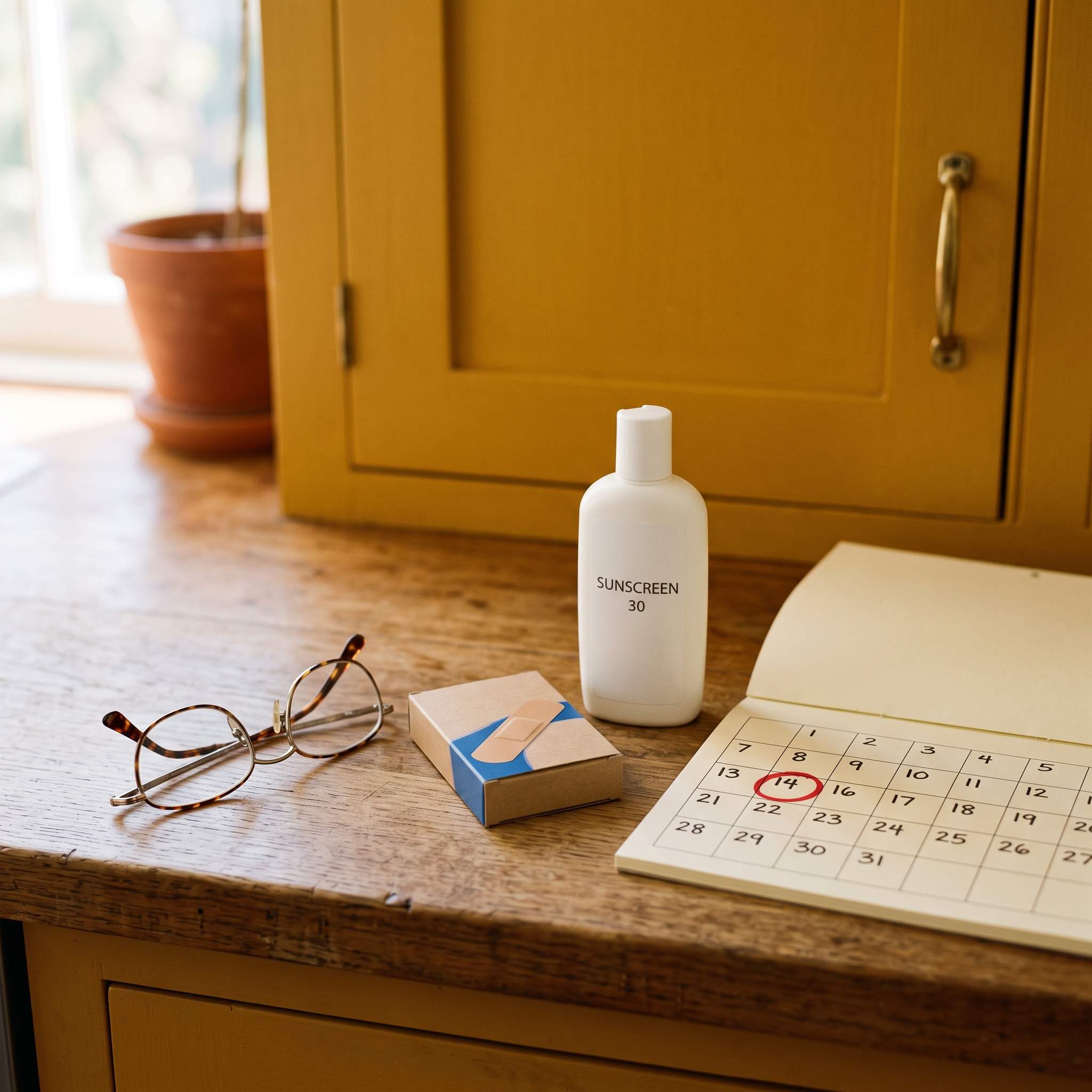
- Fourth, only after checking for a schedulable appointment, buy FSA-eligible retail items. Reading glasses, sunscreen rated at least 15 Sun Protection Factor (SPF), first aid supplies, and many over-the-counter medicines all qualify without a prescription.
What counts as an eligible expense before you buy anything
The forfeiture risk is only half the problem. The other half is buying something that looks FSA-eligible and getting the claim denied. IRS Publication 502 sets the list of qualifying medical expenses, and it is narrower than most drugstore FSA displays suggest.
Cosmetic procedures, general health items like vitamins taken for wellness rather than a diagnosed condition, and gym memberships do not qualify even when a retailer tags them “FSA eligible” on a shelf sticker. If you are unsure whether a specific item or service counts, check your plan administrator’s eligible-expense list before you buy, not after your claim is denied.
Priya’s $360 problem works out with real numbers. Her plan carries over $680 automatically, so only the $360 above that is at risk. She already has a $220 pair of prescription glasses on her list for January; she moves that appointment into December, which uses $220 of the $360.
No other appointment will fit on the calendar before year end, so she spends the remaining $140 on FSA-eligible retail items: a thermometer, a first aid kit, and sunscreen for the family. That lands her exact remaining balance at zero forfeited.
| Plan design | What it protects | Real deadline | What still forfeits |
|---|---|---|---|
| Carryover (2026 cap: $680) | Up to $680 automatically rolls into 2027 | None for the protected amount | Anything above $680 |
| Grace period | The full balance, if spent in time | About mid-March 2027 | Anything unspent after the grace period ends |
| Neither (use it or lose it) | Nothing automatically | December 31, 2026 | Every dollar not incurred by December 31 |
Frequently asked questions
Does all unused FSA money disappear on December 31? No. It disappears only if your plan offers neither a carryover nor a grace period. Check your plan document or benefits portal, since the IRS lets an employer pick exactly one of those two features, or neither, but never both together.
What is the actual difference between a grace period and a run-out period? A grace period extends the window to incur brand-new expenses, usually about two and a half months. A run-out period, often around 90 days, only extends the deadline to submit paperwork for expenses you already incurred during the plan year. Having one does not mean you have the other.
Can I submit a claim in January for a service I got in December? Yes, as long as your plan’s run-out period is still open. The expense has to have happened during the plan year; the paperwork can usually follow afterward within that window.
Does buying something on December 31 but not receiving it until January still count? For most purchases, what matters is the date you incur the expense, which for a retail purchase is typically the transaction date, not the delivery date. For a service like a dental cleaning, it is the date the service is rendered. When in doubt, ask your plan administrator before you assume either way.
What if my plan offers neither a carryover nor a grace period? Then December 31 is a real deadline with no automatic protection. Your best move is prioritizing any appointment you can still schedule before year end over retail purchases, since a service rendered in December counts even if you are billed later.